Honey Education
What Does “Local Honey” Really Mean?
A connection to the flowers, landscapes, and seasons around us.
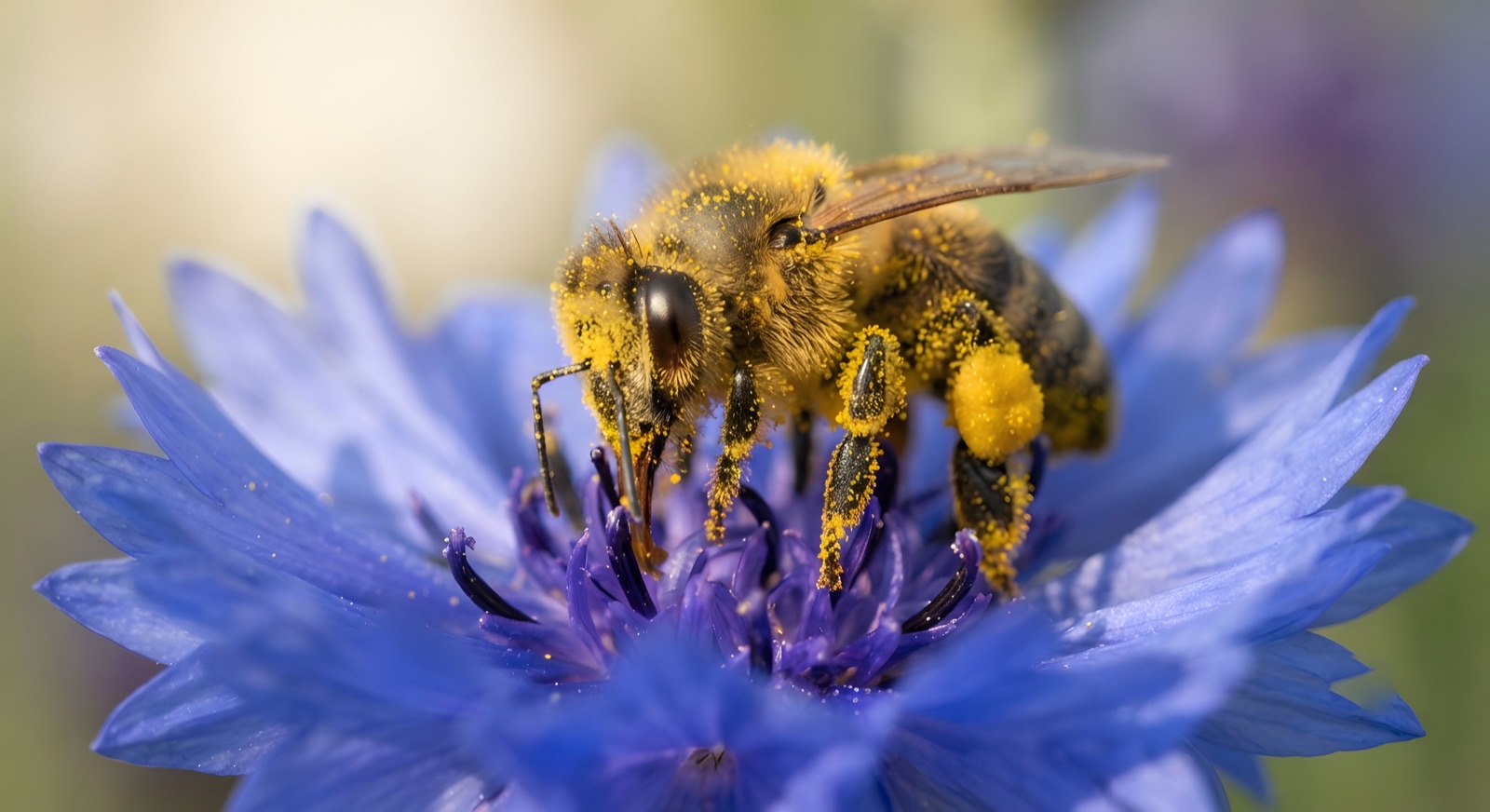
It’s more than a place on a map. It’s a connection to the flowers, forests, fields, and seasons around us.
At Odin’s Honey Haven, our guiding principle is simple: Local Bees. Local Honey.
But what exactly does local mean?
Is honey only local if it comes from a beekeeper five miles away? Ten miles? Within the same county?
Geography matters, certainly. But there’s another part of the story that deserves attention: the plants our bees visit.
Local Honey Begins With Local Flowers
Honey is a reflection of its environment.
Bees collect nectar from flowering plants growing within their foraging range. The resulting honey reflects the nectar sources available during that season, along with the weather and conditions that influence those blooms.
Here in Central Pennsylvania, those sources can include clover, goldenrod, asters, black locust, fruit blossoms, and numerous other flowering plants. What contributes to any particular harvest depends on what blooms near the colonies and when conditions allow bees to forage.
Many of these same plants grow throughout Pennsylvania and the broader Mid-Atlantic region.
That means honey harvested in Clearfield County can share floral origins with honey produced elsewhere in the Commonwealth.
Plants Don’t Recognize County Lines
A field of clover in Clearfield County and a field of clover in another part of Pennsylvania aren’t separated by some invisible botanical boundary.
The same is true of many of our woodland trees, wildflowers, and agricultural plants.
“Plants don’t recognize county lines.”
Of course, Pennsylvania has different landscapes, elevations, growing conditions, and flowering schedules. Honey from one region won’t necessarily be identical to honey from another.
But shared nectar sources mean that honey produced in Central Pennsylvania can represent floral traditions familiar to communities across much of the state.
Local is about both where honey is produced and the landscape that produces it.
What About Seasonal Allergies?
One of the most common conversations surrounding local honey involves seasonal allergies.
For generations, people have shared stories about eating local honey and noticing changes in their symptoms. Members of our own family and neighboring community have described similar experiences during periods when they were regularly eating our honey.
These are personal observations, not clinical findings. Symptoms can change for many reasons, and those experiences cannot establish that honey caused the improvement.
What’s Different About Raw, Unfiltered Honey?
At Odin’s Honey Haven, our goal is to offer honey as close to its natural harvested state as practical.
Honey can contain naturally occurring pollen grains and enzymes. Fine filtration can remove much of the pollen and other small particles; coarse straining to remove pieces of wax does not normally remove pollen. Heating and filtration are different processes, and excessive heat can affect enzymes.
These processing details help describe a honey’s character. Its nectar sources and handling also influence flavor, aroma, color, crystallization, and texture. “Raw” and “unfiltered” should describe how a product is handled, not suggest that it is always healthier or medically superior.
Experience, Curiosity, and Good Science
We believe there’s room for both personal experience and scientific inquiry.
When people tell us they’ve noticed a difference, we listen. We also follow the evidence and recognize the limits of those observations.
We won’t promise that our honey will treat allergies. For us, responsible beekeeping includes remaining curious without making claims that haven’t been demonstrated.
Our goal is local, raw honey produced with care—not a medical treatment. Final processing descriptions will accompany confirmed products when they are available.
Why We Believe Local Still Matters
For us, local honey is about knowing where your food comes from.
It’s about supporting regional agriculture, caring for honeybee colonies, and appreciating the seasonal character of honey produced close to home.
It’s also about keeping our bees rooted in Pennsylvania rather than transporting colonies across the country for migratory pollination. Learn more about our approach to local apiaries.
Our honey will reflect the plants, weather, and seasons of the places where our colonies live.
Some harvests may be light and delicate. Others may be darker, richer, and more robust. Each has its own story.
Local Bees. Local Honey.
At Odin’s Honey Haven, we’re proud to be rooted in Clearfield County, Pennsylvania.
We believe honey from our corner of the Commonwealth has something meaningful to offer people throughout the region.
Not because a county line gives it special powers, but because the plants, seasons, and landscapes of Pennsylvania connect us in ways that go far beyond a single address.
Our honey will come from local hives, gathered from local flora, and produced with care for the land we call home.
That’s what local means to us.
We’re preparing for commercial production in 2027. Explore our planned honey collection; confirmed availability will be shared when products are ready.
Sources & Further Reading
- AAAAI: Local Honey Myths and Allergy Treatment — pollen, immunotherapy, and the limits of allergy claims.
- USDA: Honey Commercial Item Description — honey’s plant origins and distinctions among raw, strained, and filtered honey (sections 6.1.1 and 6.1.8–6.1.11).
- University of Arkansas Extension: All About Honey — straining, filtration, heating, and crystallization.
- Penn State Extension: Native Perennials for Fall — fall flowers as sources of pollen and nectar.
Let’s begin a conversation.
Local relationships are at the heart of what we’re building.