Beekeeping & Apiary Management
Preparing Victoria’s Rest Homestead for Winter: Helping Our Bees Through the Cold
Thoughtful preparation for a Central Pennsylvania winter.
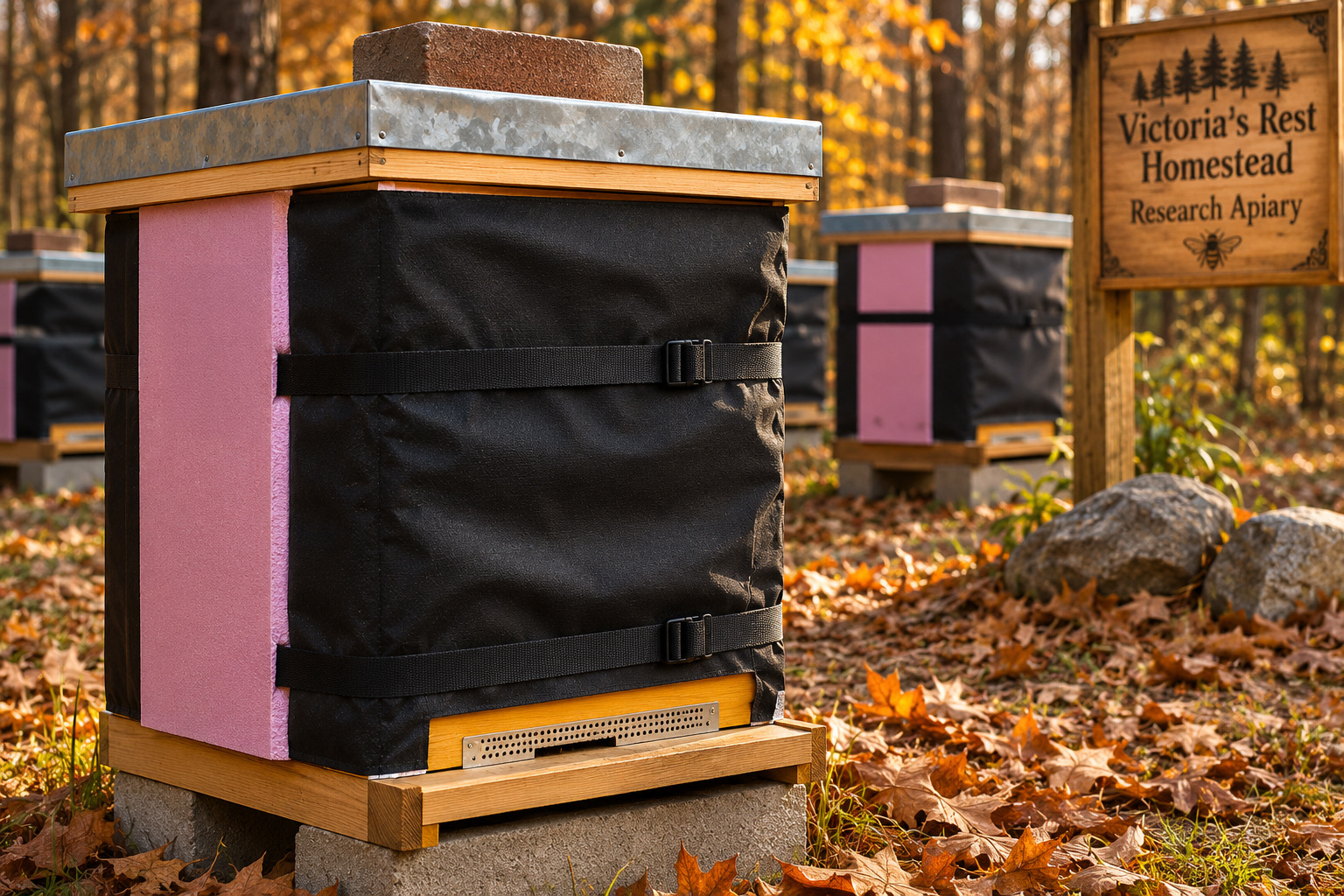
As autumn settles across Central Pennsylvania, our work shifts toward helping our colonies face the long winter ahead.
There’s a particular feeling that comes over the apiary in late autumn.
The goldenrod has faded, the days have grown shorter, and the steady activity of summer gradually gives way to quieter entrances and cooler mornings.
But while the bees may be slowing down, the beekeeper’s responsibilities are far from finished.
At Victoria’s Rest Homestead, winter preparations are underway: mite monitoring and management, 2:1 syrup feeding, and hive insulation and wrapping. Candy boards are being built in our shop, with candy to be added as winter approaches.
Our goal isn’t to keep the bees warm the way we heat our homes. It’s to give each colony the best opportunity to maintain its winter cluster, access food, and emerge healthy when spring returns.
Victoria’s Rest Homestead: Where We Learn
Victoria’s Rest Homestead Ltd. is a separate business that serves as a research and evaluation apiary in its relationship with Odin’s Honey Haven Ltd. It is not an OHH division or commercial production yard.
Here, we observe colony behavior, evaluate management methods, and explore approaches that may eventually inform practices in our commercial apiaries. Learn more about Research & Stewardship and our developing Bees & Breeding program.
Winter preparation is an especially valuable part of that work.
Every colony responds somewhat differently to the changing seasons. Genetics, colony strength, stored food, disease pressure, and local conditions all influence its ability to overwinter successfully.
We learn by observing those differences, recording what works, and remaining willing to adjust our approach.
First Priority: Varroa Mites
Before winter settles in, one of our most important responsibilities is monitoring Varroa destructor mites.
These parasitic mites damage honeybees and can transmit harmful viruses. High infestations during late summer and autumn can harm the generation of bees responsible for carrying a colony through winter.
That’s why mite management cannot wait until spring—or begin only when wrapping the hives in late autumn.
Our autumn work includes evaluating mite levels and determining whether additional treatment is necessary. Monitoring results, colony conditions, seasonal timing, and current treatment guidance inform those decisions.
Where treatment is needed, we select a registered product appropriate for the circumstances and follow its current label, including application restrictions and required protective equipment.
Late autumn can offer an additional opportunity for mite management when colonies have little or no capped brood. Oxalic-acid treatments can work well against mites on adult bees during broodless periods, but they do not reliably reach mites protected beneath brood cappings. Brood status must be checked rather than assumed from the calendar.
We want our colonies entering winter with the healthiest possible winter-bee population. That requires attention throughout the season, followed by careful monitoring as autumn draws to a close.
Building Winter Food Reserves
Once the main nectar flows have ended, the next question is simple:
Do the bees have enough food to make it through winter?
A colony survives the cold by forming a cluster. Bees generate warmth through muscular activity and consume stored food to fuel that effort.
Even when temperatures outside fall well below freezing, the bees remain active within their winter cluster. Food availability is therefore essential.
At Victoria’s Rest Homestead, our autumn feeding work includes a concentrated sugar syrup mixed at a ratio of two parts white granulated sugar to one part water, by weight.
This thicker syrup can supplement existing stores while conditions remain warm enough for the bees to collect and process liquid feed. We assess consumption and colony stores rather than assuming every hive needs the same amount.
The goal is to have adequate food available before sustained winter conditions arrive.
Knowing When to Stop Liquid Feeding
As temperatures decline and bees stop taking syrup reliably, liquid feeding becomes less practical. Cool conditions make processing syrup more difficult, and a winter cluster may be unable to reach a liquid feeder.
We plan to transition away from syrup as conditions warrant. Daytime temperatures around 50°F are a useful caution point, not a universal cutoff: feeder placement, syrup temperature, colony activity, and the weather pattern all matter.
Rather than relying on a calendar date or one temperature alone, we watch the weather and the bees.
Winter Protection: Insulation and Wind
Pennsylvania winters can bring bitter winds, freezing rain, snow, and long stretches of cold weather.
Honeybees survive winter in a cluster, but unnecessary heat loss and moisture accumulation can create additional challenges.
The winter configuration we are putting in place uses rigid foam insulation approximately two inches thick on three sides of each hive. We are targeting boards rated around R-10; the actual insulation value depends on the selected material and its product rating.
The front receives a protective weather-resistant wrap while keeping the entrance clear. This arrangement is intended to reduce wind exposure and limit heat loss through the hive walls.
Our ongoing work also includes checking cover security, entrance protection, and the condition of the equipment. This is a configuration to evaluate at the homestead, not a claim that one wrapping method is right for every hive.
Moisture Matters
A winter cluster produces moisture through respiration and normal metabolic activity. When warm, humid air reaches a cold surface, condensation can form. Water accumulating above the bees and dripping onto the cluster can create problems.
Our winter setup therefore considers both insulation and moisture management. We aim to reduce excessive condensation while avoiding unnecessary drafts. Upper insulation, airflow, hive construction, colony conditions, and the chosen equipment all affect that balance.
A Little Insurance: Winter Candy Boards
One component now being built in our shop is a candy board inspired by certified master beekeeper David Burns’ Winter-Bee-Kind system.

The connection is personal for Daniel. After taking David’s class, he had the opportunity to sit with him at the conference banquet and enjoy a long conversation. Along the way, David has become a bit of a mentor.
These boards provide hard sugar candy above the colony, where bees may access it as the winter cluster moves upward.
The purpose isn’t to replace adequate honey stores. Instead, the candy serves as supplemental emergency food if a colony exhausts or becomes separated from its accessible stores.
We are building the boards now and will add hard sugar candy as we get closer to winter. Upper insulation and ventilation are being considered as parts of the overall configuration. We are interested in how these functions work together above the cluster, and we will evaluate colony response.
Installation and food checks will depend on conditions, the selected design, and colony needs. Candy remains a reserve that must be monitored, not a guarantee against starvation.
Then Comes the Hardest Part: Leaving Them Alone
One of the challenges of winter beekeeping is resisting the urge to inspect too often.
During summer, opening a hive can provide valuable information about brood, queen activity, stores, and colony behavior. During winter, unnecessary disturbance can disrupt the cluster and expose bees to conditions they would otherwise avoid.
Once colonies are winterized, we plan to rely primarily on external observations and appropriately timed checks. We’ll watch for activity on suitable flying days, check that entrances remain clear, and monitor food availability when conditions allow.
We want useful information without repeatedly disturbing the bees we’re trying to protect.
Looking Toward Spring
Winter preparation is not a guarantee of winter survival. Even a carefully managed colony can face weather, queen problems, pests, disease, or insufficient accessible food.
Thoughtful preparation helps us address the risks we can influence.
At Victoria’s Rest Homestead, those preparations also contribute to something larger. Every observation, successful winter, and difficult lesson helps shape our understanding of the bees and their environment.
Promising approaches can be evaluated and validated before informing Odin’s Honey Haven’s commercial apiaries as we grow.
For now, our focus is on the colonies facing another Pennsylvania winter. The flowers are fading, and the bees are preparing for the long, quiet months ahead.
Our job is to do everything reasonably within our power to help them greet the spring.
Local Bees. Local Honey.
Follow future observations in the OHH Journal.
Further Reading and References
- Penn State Extension: Honey Bee Management Throughout the Seasons — seasonal colony biology and winter management.
- Honey Bee Health Coalition: Varroa Management — monitoring, current management resources, and treatment decisions.
- Cornell University: Overwintering — cold-climate preparation and colony care.
- David Burns Beekeeping: Winter-Bee-Kind Boards — the original product and design that inspired our planned boards.
These sources provide educational context. Beekeepers should follow local conditions, colony observations, monitoring results, and current pesticide labels. Product labels take precedence over older treatment tables or general seasonal advice.
Let’s begin a conversation.
Local relationships are at the heart of what we’re building.